

COP26 was not a fist-in-the-air moment, and not the victory against climate change that humanity had been banking on. Sadly, politics and commerce put a hard thumb on proceedings, limiting the action possible. Commitments to “phase down” coal, rather than a firm pledge to eliminate it outright, show how far we still have to go. But the event also served to highlight the extent of what needs to be done if humanity’s going to survive beyond the next century.
One “victory” out of the event was the belief that ensuring global warming held at 1.5 degrees was still possible. It’s worth saying, however, that 1.5 degrees isn’t a target to meet so much as an acceptance of impending disaster. In October, the IPCC explained that such a temperature increase will cause significant upticks in the frequency of extreme heat waves, monsoon-like rainfall and widespread droughts. Extreme weather events that may have taken place once every 50 years a few centuries ago could become a regular, and fatal, occurrence.
All the while, the facts of the matter are unchanged: Humanity needs to avoid adding new carbon emissions while also tackling those we’ve already emitted. That means an aggressive reduction of every man-made carbon-emitting process everywhere on Earth, the total reformation of agriculture and an unprecedented rollout of carbon capture and storage technology. And, ideally, that process should have begun the better part of two decades ago.
There are many dispiriting facts about the world, but one that always hurts is the fact that coal plants are still being greenlit. Global Energy Monitor’s data has plants currently being permitted or under construction in (deep breath) China, India, Indonesia, Turkey, Mongolia, Vietnam, Singapore, Zimbabwe, South Africa, Greece, Bosnia and Herzegovina, Serbia, Poland, Kazakhstan, Colombia, Brazil and Mexico. As Reuters says, each plant will be expected to run for at least 40 years, severely damaging efforts to go Carbon Negative. Not only is it in everyone’s best interest that these plants don’t go online, but wealthier nations have a moral obligation to help provide the funding to help at least some of those names move toward clean energy.
Tunvarat Pruksachat via Getty Images
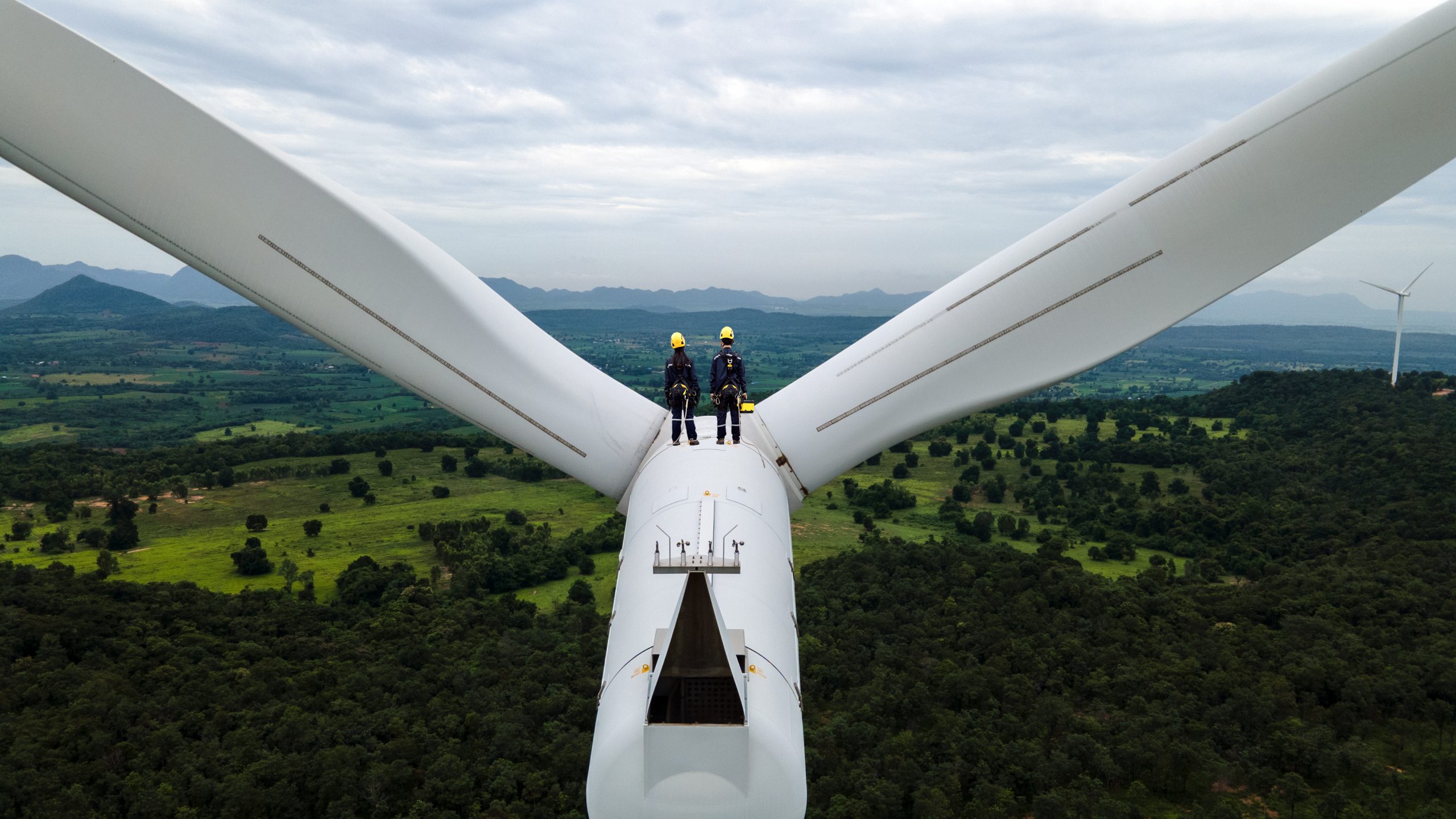
The problem is that electricity is going to be the most important resource of the 21st century, especially if we’re going to tackle climate change. Many key technologies, like transportation, will ditch fossil fuels in favor of electricity as their primary source of fuel. The world’s demand for energy is going to increase, and we’re going to need to generate that power cleanly. The US Center for Climate and Energy Solutions believes that, by 2050, the world’s power needs will jump by 24 percent. So where will we get all of this clean power from?
Fusion has, forever, been held up as a magic bullet that will totally eradicate our worries about energy generation. Unlike Nuclear Fission, it produces little waste, requires little raw fuel and can’t produce a runaway reaction. Unfortunately, Fusion remains as elusive as The Venus de Milo’s arms or a good new Duke Nukem game. ITER, the internationally-funded, French-built experimental reactor won’t be finished until 2025 at the earliest and is still just a testbed. If successful — and that’s a big if — we’re still a decade away from any serious progress being made, at which point mass decarbonization will already need to be well underway.
That means any power decarbonization will have to come from the renewable technology that’s available to us today. Nuclear, Wind, Solar, Geothermal and Tidal power all need to be ramped up to fill in the gap, but the scale of the task in the US alone is staggering. According to the EIA, the US generated just short of 2,500 billion kWh using fossil fuels in 2020. If you wanted to, for instance, replace all of that with nuclear power, you’d need to build anything in the region of 300 reactors, or increase the number of solar panels installed in the US by roughly a hundred percent — and that’s before we talk about intermittency.
 James Trew / Engadget
One thing we can do, however, is to reduce our demand for energy to lessen the need for such a dramatic shift. That can be, for instance, as easy as better insulating your home (in cold climates) or improving the efficiency of AC systems (in warm climates). Another smart move is to ditch the car in favor of public transportation, walking, or getting on your bike. There is evidence that e-bike adoption is becoming a big deal, with Forbes saying that sales are tipped to grow from just under 4 million annually in 2020 to close to 17 million by 2030.
None of this, however, will matter much unless we can also find a way to pay off the debts humanity has racked up over the last century. The IPCC believes that we need to extract up to one trillion tonnes of atmospheric CO2 in the near future. This can be done with massive tree planting works, more of which needs to be done, but also this process may need a little help.
That’s why a number of startups have been working on industrial processes to extract CO2 from the atmosphere. Right now, such a process is very expensive, but it’s hoped that as the technology improves, the cost will start to tumble. There’s also a concern, of course, that running schemes like this will give polluting companies and nations a free license to avoid reform.
As much as we can hope that this technology matures quickly, the rate of progress needs to get a lot faster a, uh, lot faster. For instance, Climeworks’ Orca, its new flagship carbon capture plant in Iceland, will extract 4,000 tons of CO2 per year. If we’re going to reach the point where we can avert a climate catastrophe using extraction alone, we’ll need this capacity to increase by about a hundred million times.
The point of this is, broadly speaking, to outline how much more sharply our attitudes toward the climate need to shift. If we’re going to succeed at defeating climate change then we’re going to need to go onto the sort of war footing – where resources are devoted to nothing but solving the crisis – that few can ever imagine undertaking. But, as most of the resources point out, the only way that we’re going to stave off the damage after dragging our feet for so long is to go all-out in search of a solution.



