

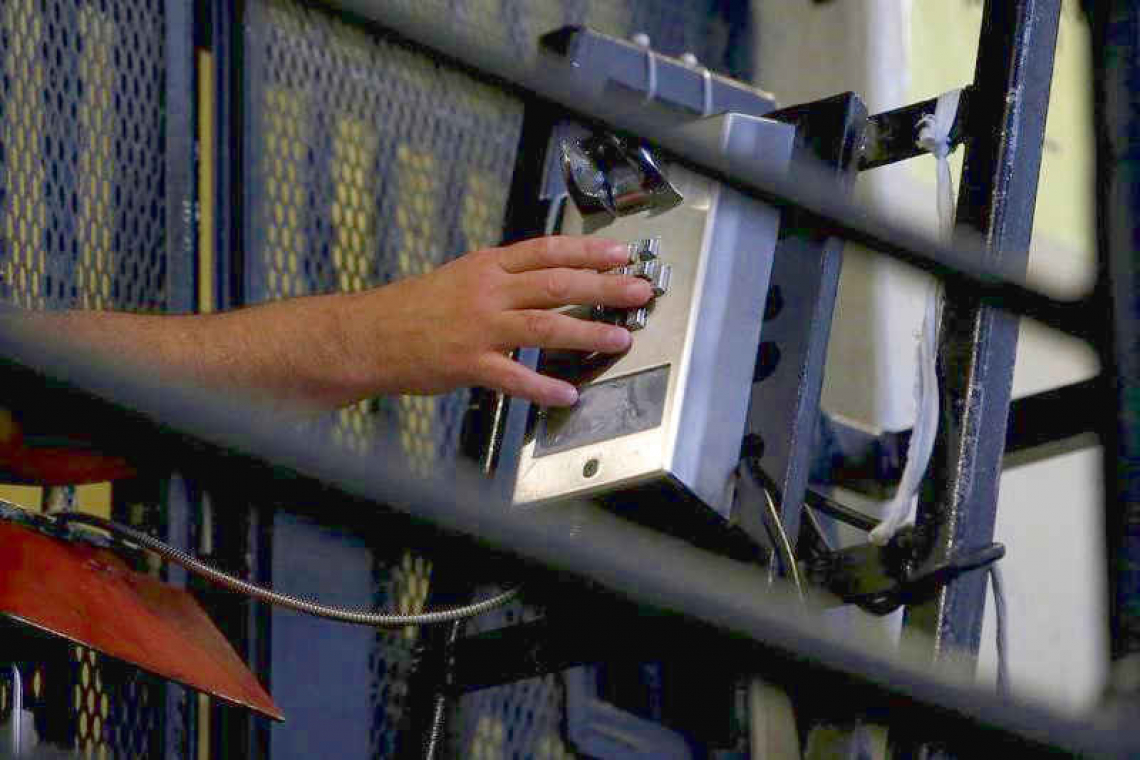
A death row inmate uses a phone from his cell in the East Block during a media tour of California’s Death Row at San Quentin State Prison in San Quentin, California December 29, 2015. Picture taken December 29, 2015. REUTERS
WASHINGTON/LOS ANGELES — For people like Heather Bollin, a 43-year-old woman in Texas engaged to a man who is currently incarcerated, constant surveillance is a fact of life: the three daily phone calls they have together are subject to monitoring by prison officials.
“We are never able to communicate without being under surveillance,” she told the Thomson Reuters Foundation in a phone interview, asking that the prison her fiance is in remain anonymous because she fears retaliation.
Prisons in the United States could get more high-tech help keeping tabs on what inmates are saying, after a key House of Representatives panel pressed for a report to study the (AI) to analyze prisoners’ phone calls.
But prisoners’ advocates and inmates’ families say relying on AI to interpret communications opens up the system to mistakes, misunderstandings and racial bias.
TECHNOLOGY
TECHNOLOGY
TECHNOLOGY
The call for the Department of Justice (DOJ) to further explore the technology, to help prevent violent crime and suicide, accompanies an $81 billion-plus spending bill to fund the DOJ and other federal agencies in 2022 that the Appropriations Committee passed last month.
The technology can automatically transcribe inmates’ phone calls analyzing their tone of voice and flagging certain words or phrases, including slang, that officials pre-program into the system.



