

Image: sdecoret/Shutterstock via AFP Relaxnews
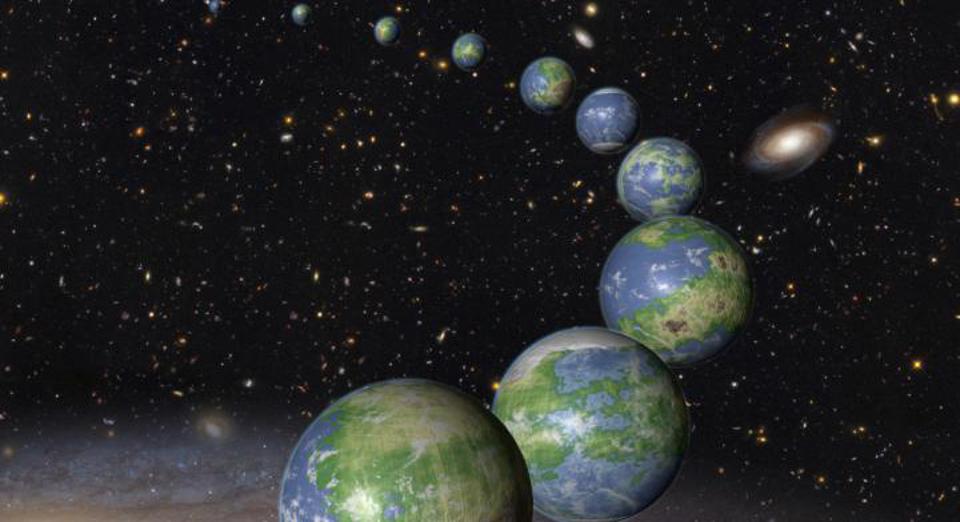
The Milky Way could be packed with planets with potentially inhabitable surfaces. At least, that’s what a team of researchers in Denmark suggest, after creating a computer model allowing them to estimate the means and the materials from which the planets in our solar system were formed.
NASA’s Perseverance rover began its exploration of Mars on Thursday, Feb. 18, keeping the whole world on tenterhooks as it landed on the red planet. While this space mission is getting underway, scientists from the University of Copenhagen have published research allowing them to suppose that water could have been a building block for all the planets in the Milky Way.
Using a computer model, professor Anders Johansen and his team have calculated the speed at which planets are formed and from which basic building blocks they are made of. The study indicates that it was tiny, millimeter-sized dust particles of ice and carbon which, 4.5 billion years ago, accreted to form the planet we today call home.
According to the study authors, the water molecule (H2O) is found everywhere in our galaxy. Based on that, the scientists suggest that other planets may have formed in the same way as Earth, Mars and Venus.
TECHNOLOGY
TECHNOLOGY
TECHNOLOGY
“With our model, all planets get the same amount of water, and this suggests that other planets may have not just the same amount of water and oceans, but also the same amount of continents as here on Earth. It provides good opportunities for the emergence of life,” explains professor Martin Bizzarro, co-author of the study, published in Science Advances.
For the time being, this remains theoretical.



