

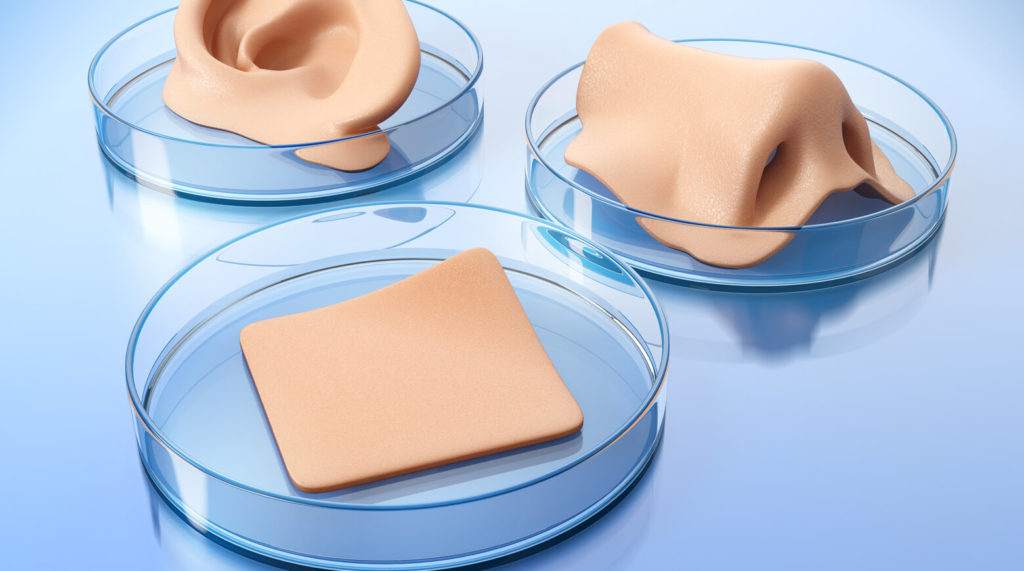

The University’s 2.5 million-pound study will use cells and plant materials to 3D-print the cartilage of the nose and ears. If successful, it could be used in the future to treat people born without body parts or with facial scars due to burns, trauma or cancer.
The report says the project will involve scientific research to determine the ideal combination of cells to grow the new cartilage, leading to clinical trials of facial reconstruction in humans.
According to Professor Ian Whitaker, professor of plastic surgery at Swansea, the use of the printers will also speed up surgery, improve patient well-being and reduce costs. He said he hopes clinical trials can be done in Swansea in “the next two to five years.”
“My hope is that Wales will be one of the first places in the world where patients will benefit from this technology,” Professor Whitaker said.
The report says patients with scars and scars say it could change their lives.
Six-year-old Elizabeth, who lost several fingers and an ear in a fire when she was six months old, said she found the new study “exciting.”
“Given much of the work they do in this lab, we hope it will benefit children like Elizabeth, so they don’t have to face the physical and mental impact of scars,” her father Liam said. .
“The opportunity to restore normalcy to people with facial and body deformities is enormous,” added Simon Weston, a leading spokesman for the Scarless Foundation, which is partially funding the study.
Weston, a war veteran, has more than 85 to 90 percent of his body scars after a bomb hit the ship he served on during the Falklands War.
“You can’t change what happens to people, but through this research and development you can change what their future might look like,” he said.
Read more
Humanity’s largest genealogical tree revealed the history of our species
Physicists recreated T-1000 abilities from “Terminator 2” in lab
Scientists may have found the missing link between single-cells and human cells



