

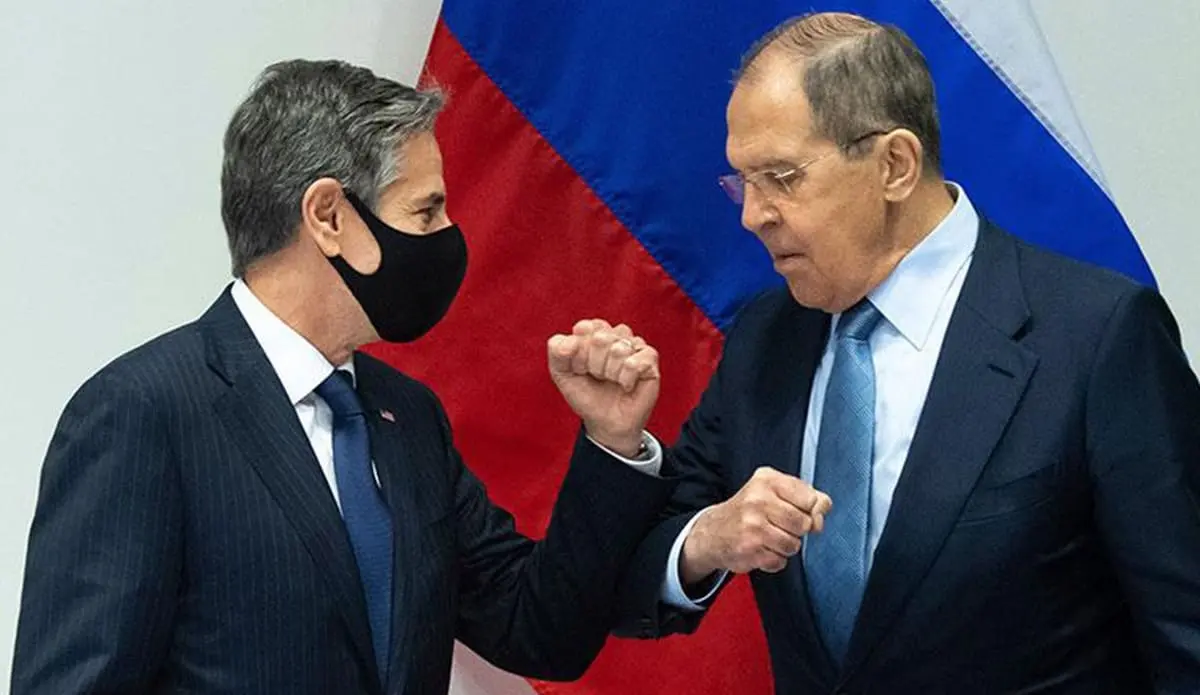
Another round of security consultations held in Geneva by State Department chief Anthony Blinken and Russian Foreign Minister Sergei Lavrov proved powerless to start the Russian market’s upward momentum.
The ruble, equities and government bonds fell in trading on Friday after the mixed results of the meeting in Geneva, which on the one hand was held without aggressive rhetoric, but on the other hand again did not bring any concrete agreements.
The dollar rose by 53 kopecks to 77.22 rubles, a new maximum over the past two weeks. The Euro added 87 kopecks and is trading at 87.5750 rubles as of 18.07 Moscow time.
The stock market made an attempt at sharp growth at the end of the fifth hour of trading, but the attempt failed quickly, and the day ended in the red: by 2.53% for the MosSb index and 3.55% for the RTS index.
The OFZ index shed 0.27% on the RGBI, which was again one step away from updating its lows from 2019.
The talks between Blinken and Lavrov lasted less than planned, and at the end, the Russian foreign minister stated that NATO continues to view Ukraine as a zone of its influence, despite Russia’s demand to abandon the alliance’s expansion plans.
According to Lavrov, Russia is not going to attack Ukraine and is waiting for a written response from Washington to the proposals on security guarantees.
For his part, Blinken reiterated that the U.S. is not going to discuss NATO’s “open door policy” with Russia and will consider “any introduction of troops” an invasion followed by a “swift, tough and united” response.
The U.S., Blinken said, is willing to continue dialogue with Russia, including at the presidential level, if it will help de-escalate. “There are no plans, dates or even talk about this,” the Russian Foreign Ministry responded.
“The market remains under the influence of the incoming news from the political front and will continue to guess: will they agree or not,” said Alexander Arutyunyan, chief economist at Russ-Invest Investment Company.
And although the market is obviously oversold and trading volumes have grown in some securities “on the low side,” “we can probably expect a U-turn only when the “high contracting parties” officially announce some agreement,” says Arutyunyan.
“Geopolitical tensions will persist for some time and we may indeed see new drawdowns of Russian assets, as negotiations are still ongoing, which means we are likely to hear a new batch of verbal interventions,” Konstantin Asaturov, asset manager of Sistema Capital Asset Management, noted.
Head of State Anthony Blinken and Russian Foreign Minister Sergey Lavrov. Photo: Yandex Images
Along with geopolitics, Russian assets are under pressure from the external background, notes Andrei Kochetkov, lead analyst at Otkritie Broker. Stock indexes in the U.S. are declining, led by the tech sector, which is losing 1.3% on the Nasdaq Index; Brent crude is down 1.5%, to $87.08 a barrel.
“The outlook for risky assets is clouded by the central bank’s withdrawal of stimulative policy,” says Mohit Kumar, managing director at Jefferies International: the U.S. Fed will complete its asset purchases in March and could begin raising interest rates at the same time, a scenario the market estimates to be almost 100% likely.



