

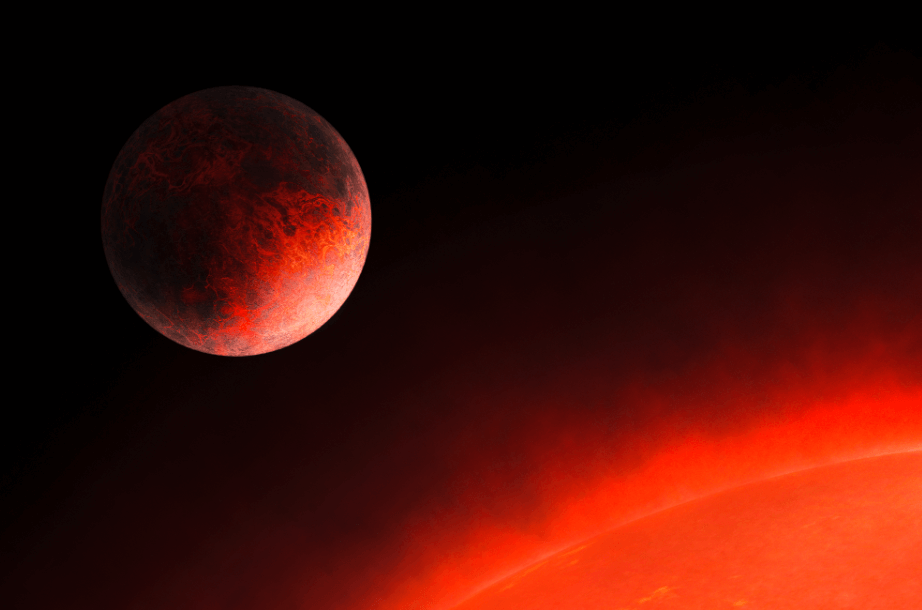

Using an instrument from the University of Colorado at Boulder, researchers in Professor Greg Ricker’s lab recreated the high temperatures and pressures on various exoplanets to map the gases in their atmospheres.
The gases found in Earth’s atmosphere – methane, carbon dioxide and others – make it clear that someone lives on our planet. It’s the same situation with exoplanets: by studying the composition of the atmospheres of extrasolar objects, scientists can figure out whether to look for life there. To simplify the process, scientists have recreated the temperature and pressure – the climate – on different known exoplanets in the lab.
The researchers are also confident – their work will help in the study of transit spectroscopy of exoplanets. This is a method in which the atmospheric composition of an exoplanet is studied using light passing through it. Different elements absorb photons differently, changing the color of light from the atmosphere.
Scientists need a map to interpret this data. “That’s where our experiment comes in handy. When we create a small microcosm of an exoplanet’s atmosphere in the lab, we send light into it with lasers and study the photons that come out. Based on these data, we map the gases in the atmosphere” – conclude the authors of the study.
Together with members of NASA’s Jet Propulsion Laboratory (JPL), the scientists compared sensor readings with computer simulations, separating the gases of different exoplanets with a device that simulates the atmosphere, to find out how light is absorbed under different conditions.
Read also
The very strange universe: phenomena and objects in space that are hard to imagine
The world’s largest offshore wind farm has started generating power
Study from China: omicron strain bypasses protection against vaccination and carried COVID-19



