

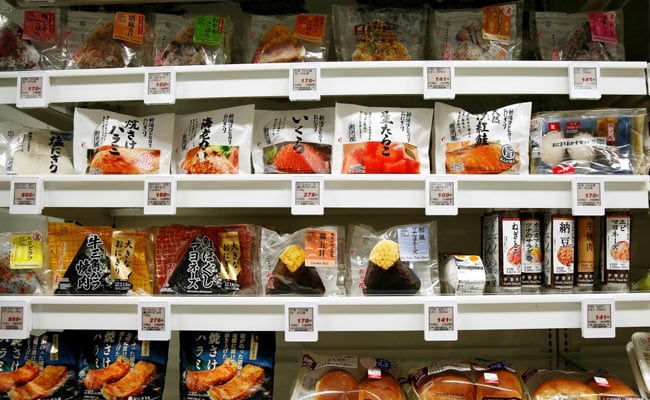
FILE PHOTO: Food products are displayed at Lawson Open Innovation center during an event introducing its next-generation convenience store model in Tokyo, Japan December 4, 2017. REUTERS/Kim Kyung-Hoon/File Photo
TOKYO — Japanese companies are ramping up the use of artificial intelligence and other advanced technology to reduce waste and cut costs in the pandemic, and looking to score some sustainability points along the way.
Disposing of Japan’s more than 6 million tonnes in food waste costs the world’s No.3 economy some 2 trillion yen ($19 billion) a year, government data shows. With the highest food waste per capita in Asia, the Japanese government has enacted a new law to halve such costs from 2000 levels by 2030, pushing companies to find solutions.
Convenience store chain Lawson Inc has started using AI from U.S. firm DataRobot, which estimates how much product on shelves, from onigiri rice balls to egg and tuna sandwiches, may go unsold or fall short of demand.
Lawson aims to bring down overstock by 30% in places where it has been rolled out, and wants to halve food waste at all of its stores in 2030 compared with 2018.
TECHNOLOGY
TECHNOLOGY
TECHNOLOGY
Disposal of food waste is the biggest cost for Lawson’s franchise owners after labour costs.
Drinks maker Suntory Beverage & Food Ltd is experimenting with another AI product from Fujitsu Ltd to try to determine if goods such as bottles of oolong tea and mineral water have been damaged in shipping.



