

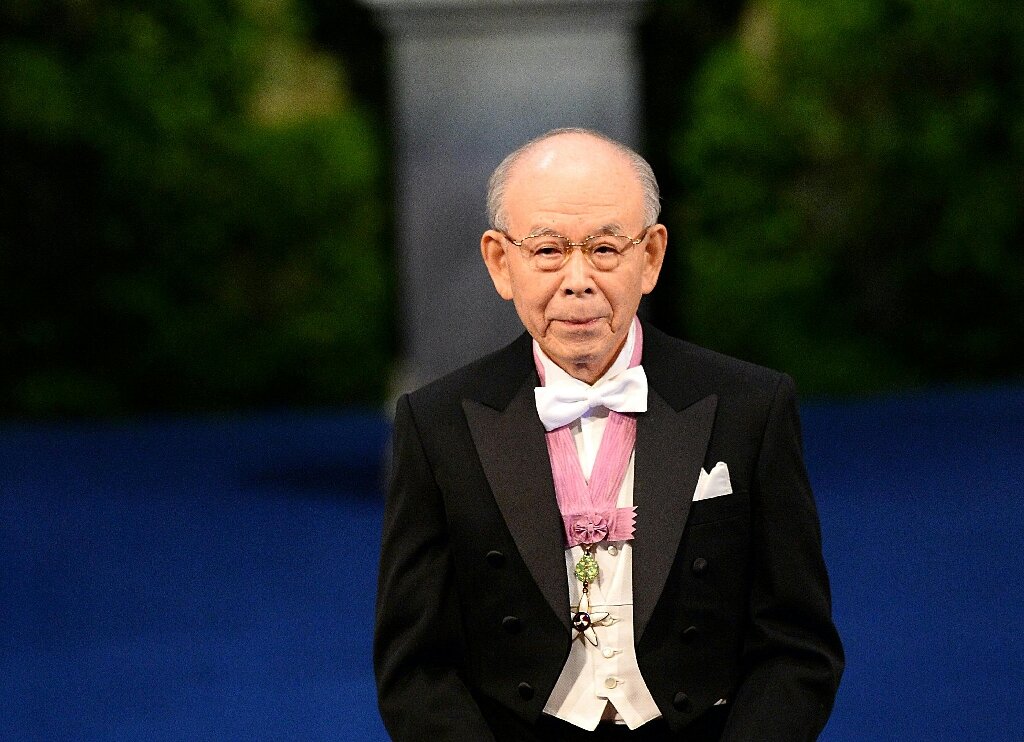
(FILES) In this file photo taken on October 10, 2014, Meijo University Professor Isamu Akasaki gestures as he answers questions during a press conference at Nagoya University in Nagoya, central Japan. (Photo by TORU YAMANAKA / AFP)
TOKYO — Japanese Nobel laureate Isamu Akasaki, who won the physics prize for pioneering energy-efficient LED lighting — a weapon against global warming and poverty — has died aged 92, his university said Friday.
Akasaki won the 2014 prize with two other scientists, Hiroshi Amano and Shuji Nakamura. Together they developed the blue light-emitting diode, described as a “revolutionary” invention by the Nobel jury.
He died of pneumonia on Thursday morning at a hospital in the city of Nagoya, according to a statement on the website of Meijo University, where Akasaki had been a professor.
LED lamps last for tens of thousands of hours and use just a fraction of energy compared with the incandescent lightbulb pioneered by Thomas Edison in the 19th century.
TECHNOLOGY
TECHNOLOGY
TECHNOLOGY
Red and green diodes had been around for a long time, but devising a blue LED was the holy grail, as all three colors need to be mixed to recreate the white light of the Sun.
The trio made their breakthrough in the 1990s, after three long decades of dogged work, when they managed to coax bright blue beams from semiconductors.



