

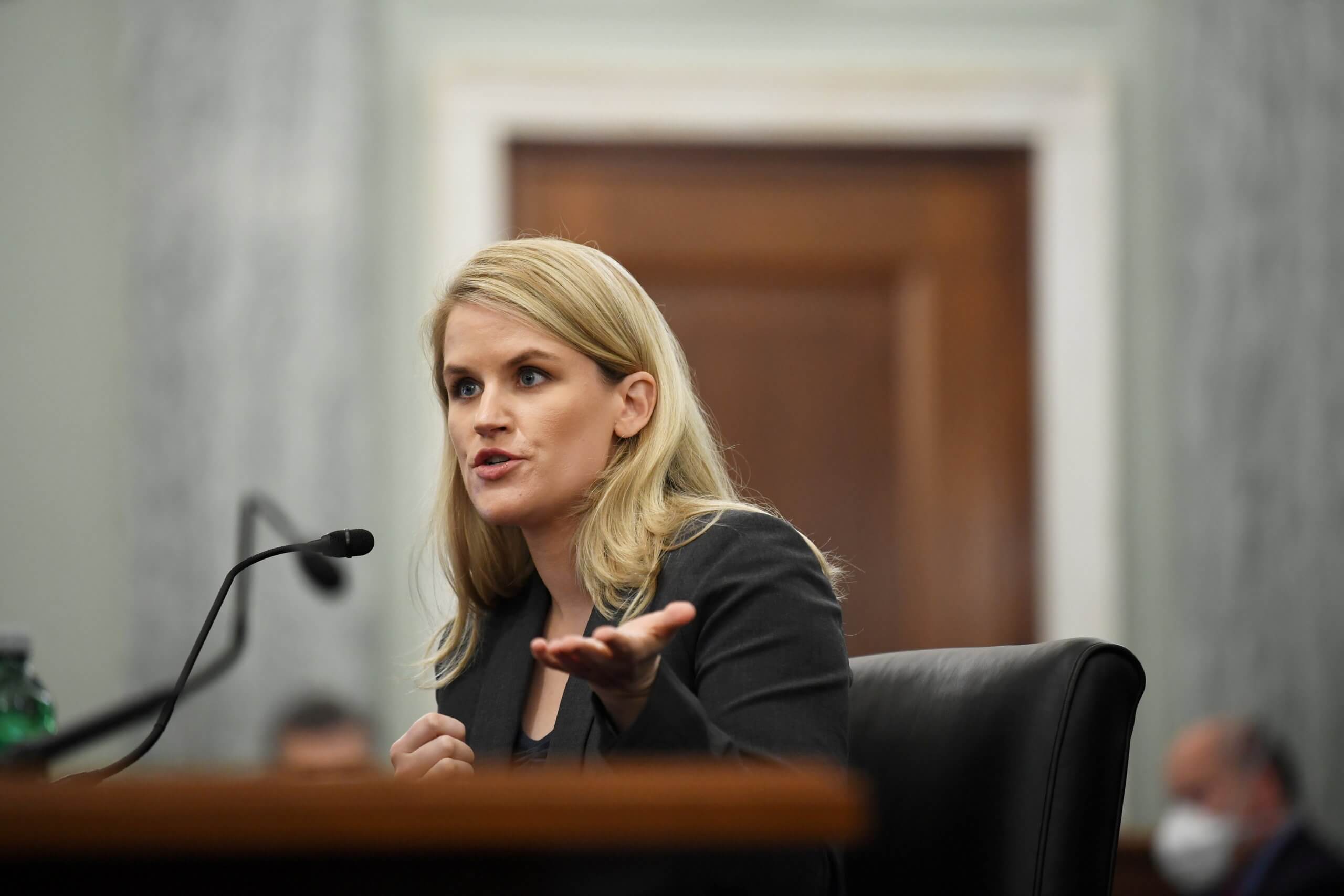
FILE PHOTO: Former Facebook employee and whistleblower Frances Haugen testifies during a Senate Committee on Commerce, Science, and Transportation hearing entitled ‘Protecting Kids Online: Testimony from a Facebook Whistleblower’ on Capitol Hill, in Washington, U.S., October 5, 2021. Matt McClain/Pool via REUTERS/File Photo
Facebook employees have warned for years that as the company raced to become a global service it was failing to police abusive content in countries where such speech was likely to cause the most harm, according to interviews with five former employees and internal company documents viewed by Reuters.
For over a decade, Facebook has pushed to become the world’s dominant online platform. It currently operates in more than 190 countries and boasts more than 2.8 billion monthly users who post content in more than 160 languages. But its efforts to prevent its products from becoming conduits for hate speech, inflammatory rhetoric, and misinformation – some of which have been blamed for inciting violence – have not kept pace with its global expansion.
Internal company documents viewed by Reuters show Facebook has known that it hasn’t hired enough workers who possess both the language skills and knowledge of local events needed to identify objectionable posts from users in a number of developing countries. The documents also showed that the artificial intelligence systems Facebook employs to root out such content frequently aren’t up to the task, either; and that the company hasn’t made it easy for its global users themselves to flag posts that violate the site’s rules.
Those shortcomings, employees warned in the documents, could limit the company’s ability to make good on its promise to block hate speech and other rule-breaking posts in places from Afghanistan to Yemen.
TECHNOLOGY
TECHNOLOGY
TECHNOLOGY
In a review posted to Facebook’s internal message board last year regarding ways the company identifies abuses on its site, one employee reported “significant gaps” in certain countries at risk of real-world violence, especially Myanmar and Ethiopia.
The documents are among a cache of disclosures made to the U.S. Securities and Exchange Commission and Congress by Facebook whistleblower Frances Haugen, a former Facebook product manager who left the company in May. Reuters was among a group of news organizations able to view the documents, which include presentations, reports and posts shared on the company’s internal message board. Their existence was first reported by The Wall Street Journal.



