

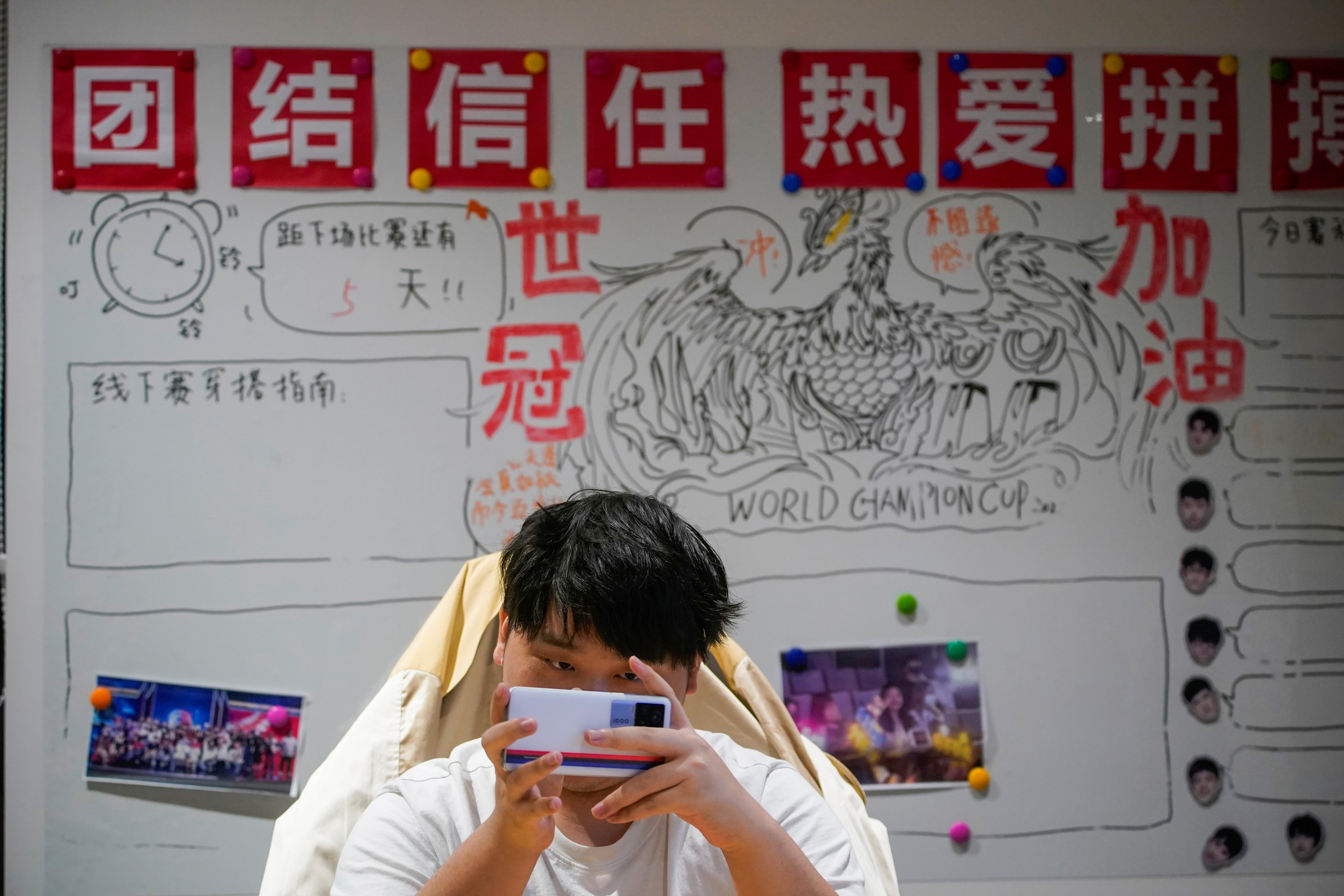
A player of Rogue Warriors esports team trains for the game “Arena of Valor” at his club in Shanghai, China September 3, 2021. Picture taken September 3, 2021. REUTERS
SHANGHAI — In glass-paneled conference rooms, members of the Shanghai-based esports team Rogue Warriors tap away at their phones as they train from 11 a.m. till late, occasionally breaking for food.
“I spend 15 of 24 hours a day playing video games,” says 19-year-old Zhang Kaifeng who plays Tencent Holdings Ltd’s online battle arena game “Arena of Valor” professionally, adding that the long hours are necessary to remain competitive.
China is the world’s biggest esports market with an estimated 5,000-plus teams, but the government’s aimed at curbing gaming addiction are set to make careers like Zhang’s hard to emulate.
Provoking an outcry from many Chinese teens, the changes task gaming companies with limiting online games for under 18s to just three hours a week. Even before the changes, minors were restricted to 1.5 hours on weekdays and three hours on weekends.
TECHNOLOGY
TECHNOLOGY
TECHNOLOGY
Top esports players are typically discovered in their teens and retire in their mid-20s, and experts compare the intensity of their training to that of Olympic gymnasts and divers. One of the world’s most well-known players of Riot Games’ “League of Legends”, Wu Hanwei, also known as Xiye, began playing at 14 and joined a club at 16.
“The new regulations almost kill young people’s chances of becoming professional esports players,” said Chen Jiang, associate professor at Peking University’s School of Electronics Engineering and Computer Science.



