

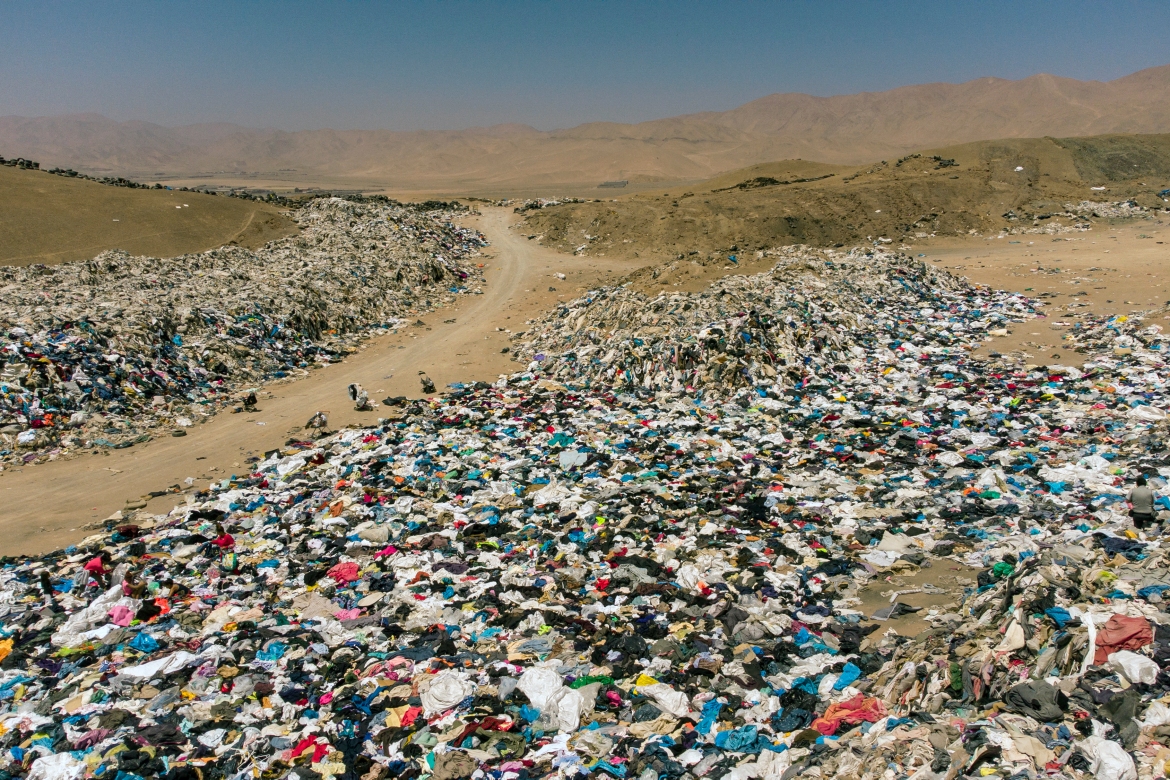
View of used clothes discarded in the Atacama desert, in Alto Hospicio, Iquique, Chile, on September 26, 2021. – EcoFibra, Ecocitex, and Sembra are circular economy projects that have textile waste as their raw material. The textile industry in Chile will be included in the law of Extended Responsibility of the Producer (REP), forcing clothes and textiles importers to take charge of the waste they generate. (Photo by MARTIN BERNETTI / AFP)
Alto Hospicio, Chile — A mountain of discarded clothing including Christmas sweaters and ski boots cuts a strange sight in Chile’s Atacama, the driest desert in the world, which is increasingly suffering from pollution created by fast fashion.
The social impact of rampant consumerism in the clothing industry — such as child labor in factories or derisory wages — is well-known, but the disastrous effect on the environment is less publicized.
Chile has long been a hub of secondhand and unsold clothing, made in China or Bangladesh and passing through Europe, Asia, or the United States before arriving in Chile, where it is resold around Latin America.
Some 59,000 tons of clothing arrive each year at the Iquique port in the Alto Hospicio free zone in northern Chile.
TECHNOLOGY
TECHNOLOGY
TECHNOLOGY
Clothing merchants from the capital Santiago, 1,800 kilometers (1,100 miles) to the south, buy some, while much is smuggled out to other Latin American countries. But at least 39,000 tons that cannot be sold end up in rubbish dumps in the desert.
“This clothing arrives from all over the world,” Alex Carreno, a former employee in the port’s import area, told AFP.



