


The security system proposed by the Australian startup includes three components: a key fob, a control unit that is installed in the car interior, and a capacitive sensor. The key fob records the distance from the control unit. When the driver moves more than 10 meters away from the car, the system checks whether someone is sitting in a child seat. If the child is left in the car, the control unit sends a signal on the ISM band. The key fob starts flashing and vibrating.
 Diagram of the device’s operation. Image: Infalut
Infalut notes that up to four capacity sensors can be connected to a single control unit. This allows for the safety of all children, including those in a large family.
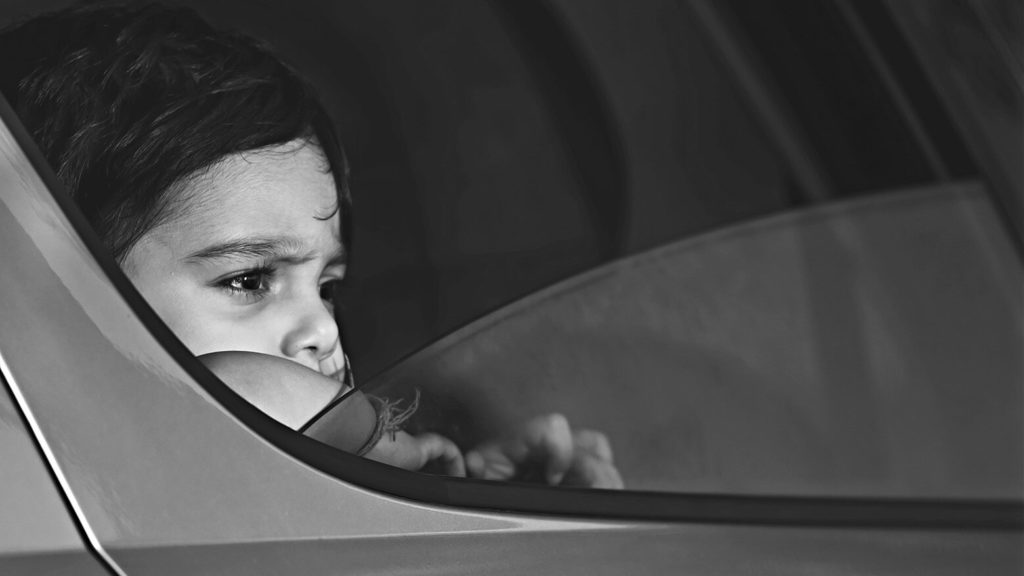
The problem of children left in the car, especially relevant for countries with hot climates. In Australia, several thousand children are found in cars each year at risk of dying from hyperthermia. According to KidsAndCars.org, in 2021 alone, 23 children in the United States died after being left inside a car. David Diamond, a professor of psychology at the University of South Florida, showed in his study that these tragedies are not caused by bad parents, but by physiology, a systemic error in our memory.
Diamond says we have “prospective memory,” the one that stores information about planned actions. “When we perform routine actions, such as driving one of our usual routes, we are being driven by autopilot. In this situation, only prospective memory can remind us to take an out-of-the-box action,” Diamond points out. – Any distracting event, general fatigue or stress can lead to memory loss. What’s more, some parents get the false sense that they’ve dropped their child off at school, for example, when in fact they’ve stayed in the car.”
Read more:
“James Webb took the clearest photo of a star in history
Voluntary death. We tell you how the euthanasia procedure works around the world
Scientists stumble upon 1,500-year-old archaeological anomaly



