

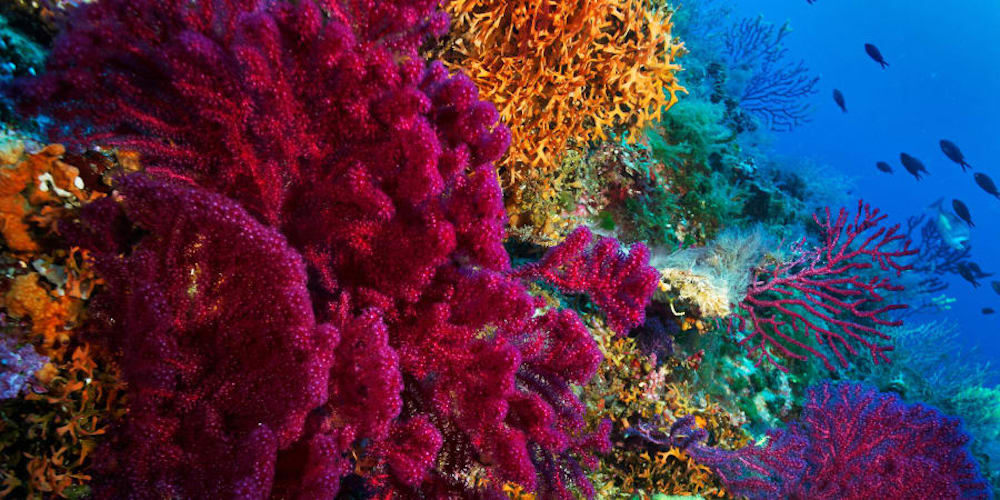
Coral reefs provide shelter and protection for hundreds of species of fish and crustaceans. Image: goran_safarek/Shutterstock
According to scientists in Japan, a coral’s color can tell of its resilience to climate change. The yellow-green color morph of a given species of coral was found to resist higher temperatures more effectively than the brown color morph.
If you’ve dived in the Pacific Ocean or the Red Sea in recent years, you may have been struck by the amount of white coral reefs. These underwater structures are under threat from climate change and marine pollution. This can cause coral to turn a ghostly white color — a phenomenon called bleaching — and ultimately die.
Coral reefs provide shelter and protection for hundreds of species of fish and crustaceans. One species of coral that is particularly threatened by rising ocean temperatures is Acropora tenuis, which known to have three color morphs: brown, purple and yellow-green.
According to a new study from the Okinawa Institute of Science and Technology (OIST) Graduate University in Japan, these different colors could play more than a purely aesthetic role, as they appear to signal the coral’s resilience to climate change.
TECHNOLOGY
TECHNOLOGY
TECHNOLOGY
The study authors focused on different color morphs of Acropora tenuis coral grown for around 20 years in an aquarium. Their aim was to observe the coral over the last two decades and determine their resilience to climate change, as well as the underlying causes.
The yellow-green color morph more resilient to climate change



