

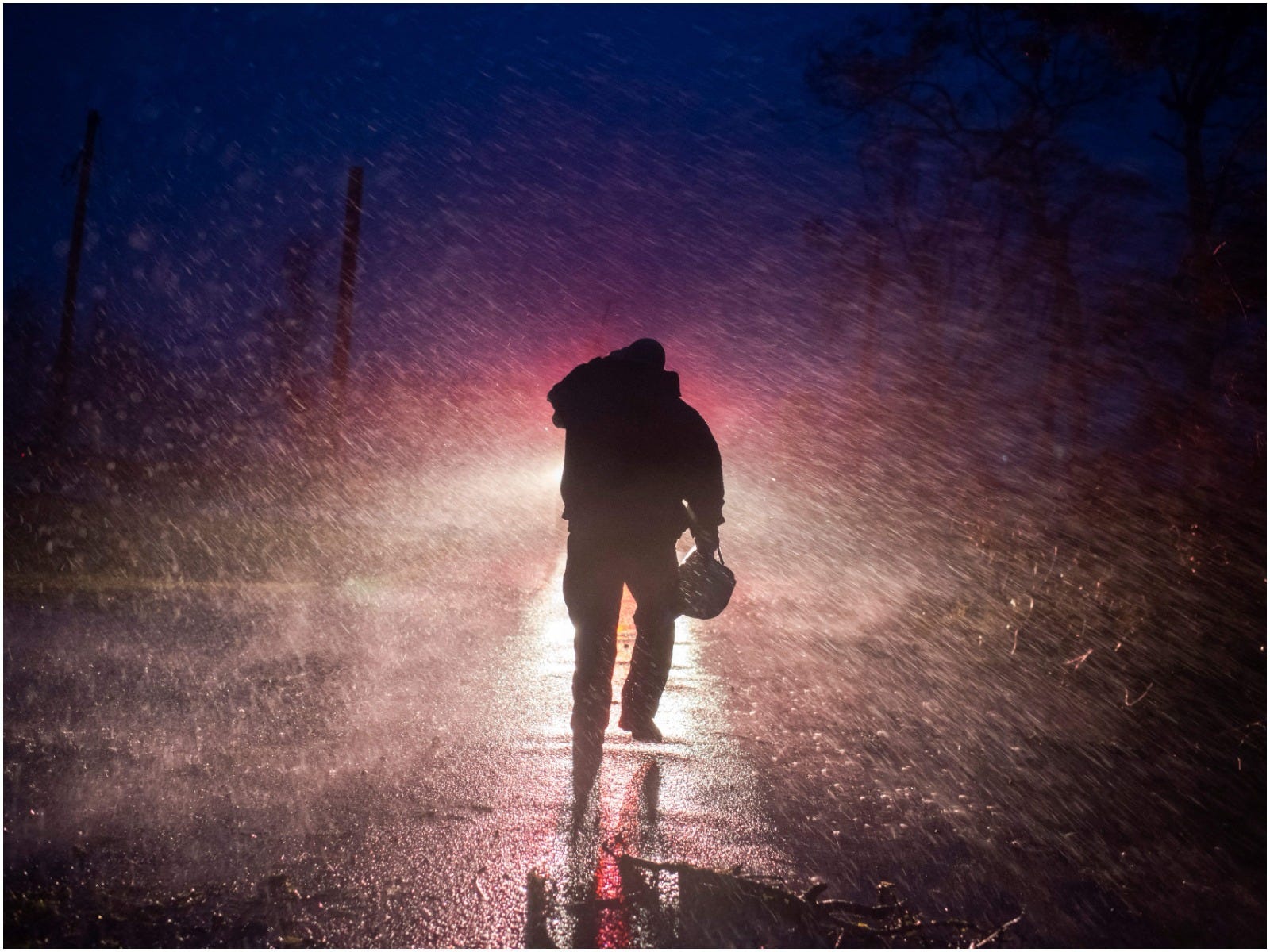
Hurricane Ida is now Louisiana’s joint most powerful storm ever.
MARK FELIX/AFP via Getty Images
- 20.5% of US adults lived in households unable to pay all their utility bills in the last year, per the Census Bureau.
- Climate change is increasing price of raw materials.
- Additionally, energy companies have been accused of gouging prices during climate crises.
It’s getting harder for Americans to keep the lights on — literally.
According to the Census Bureau, 1 in 5 US adults lived in households that were unable to pay all their utility bills in the last year. That might be partly due to the increased cost of utilities over the course of the pandemic. Climate change and extreme weather bear much of the blame: these conditions raise the prices of raw materials, which raise the prices of heat, electricity, and even coffee. Additionally, energy companies have been accused of gouging prices during climate crises. As a result, thousands of Americans won’t have power and heat this winter — companies will simply shut them off.
The Census Bureau’s monthly Household Pulse Survey, which was launched in April of last year to record data about the impact of the coronavirus on individuals and families, also found that nearly a third of adults live in households where it has been somewhat or very difficult to pay usual expenses in the past week (30.5%).
Households currently owe power companies nearly $20 billion, 67% higher than the average year, according to the National Energy Assistance Directors’ Association. That number peaked at about $30 billion at the height of the pandemic.
Utility bills have been increasing over the course of the pandemic, and gas prices are at a seven-year high in the US. The increase in Americans’ electricity bills from 2019 to 2020 was between about 23% and 40% in 14 states, according to energy company Arcadia’s database. Arcadia estimated that overall, there were 30% more past due balances in 2020 than in 2019.
In addition, household savings from pandemic aid have dried up for low-income people. Research published by JPMorgan Chase in November found that low-income families experienced the “greatest percent gains” during each round of stimulus, yet also used up their money faster. That’s largely because those households had smaller financial buffers for their crisis-induced expenses.
Companies are allegedly jacking up prices amid climate crises — and people may be without heat and power for the next ones
Households in coastal states like California, New York, and New Jersey are suffering from increasing energy bills, but it’s southern states like Texas, Oklahoma, and Mississippi that are taking the biggest hit. That doesn’t bode well for them, as scientists project that they will suffer more from the effects of climate change in the upcoming decades.
Winter Storm Uri overtaking the south earlier this year provides one example of the relationship between skyrocketing utility prices and climate change. An energy emergency was declared in February, 14 states in the US faced rolling blackouts, and at least 20 people died. At the same time, the wholesale price of electricity surged 17,900% as demand increased and supply fell offline. Some residents were charged more than $1,000 per day in electricity bills.
The storm drove up demand for natural gas and heat while simultaneously clogging oil wells with ice — that also reduced production in a region that desperately needed fuel.
This type of storm — and the tabs it incurs for households — is becoming the norm due to climate change.
The Biden administration accused gas companies of “illegal conduct” in November, saying they were ripping off Americans to increase their profits. Biden stressed that the American Rescue Plan, which he signed in March, doubled funding for the Low-Income Energy Assistance Program, or LIHEAP, which helps families pay utility bills. Energy equity activists have called the program a “band-aid,” as low-income families, particularly Black and brown ones, frequently pay more for utilities in older, poorly-insulated homes. Additionally, only 17% of eligible households receive LIHEAP benefits, according to the US Department of Health and Human Services.
Energy companies may simply cut off power for households building debt this winter as emergency moratoria expire. Last year, at least 32 states halted energy companies from cutting people’s power, but nearly all those moratoria have ended.
And shutoffs are surging.
Nearly 1 million households had their power cut over the last year, a study by the Center for Biological Diversity reported. That number only includes the 17 states that contributed data, and the US Census Bureau estimates that the real number is closer to 3.4 million households.
Read the original article on Business Insider 



