While Reuters is reporting on the huge number of tankers of Russian oil that cannot find buyers, only the laziest has not posted a screenshot from Bloomberg about the growth of oil production in Russia.
At the same time, we are seeing record prices not only for gasoline in Europe and the U.S., but also for oil itself, the quotes of which are confidently trading above a hundred a barrel. West Texas Intermediate (WTI) is currently trading around $111 and North Sea Brent is just under $115.
To be or not to be: $75 or $150
Moreover, there is a wide range of reasons based on which we have a better chance of seeing oil at $150 in the short to medium term 2022-2023 than at $75, for example
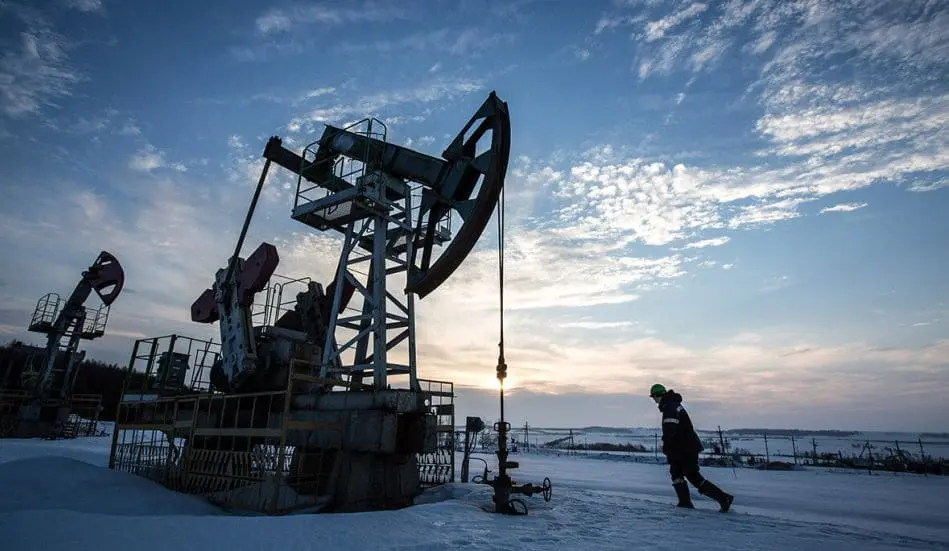
. Oil production in Russia. Photo: Yandex
And even recessionary expectations for the world economy, which theoretically could strike a blow to demand will not be able to reduce it so much to outweigh a number of factors that will not only keep oil prices from falling, but will contribute to their growth. We are not going to describe the current geopolitical factor. It lies on the surface, and it is clear without any additional comments. We will talk about something else.
The
most fundamental reason lies in the energy policy of the last decade. The emphasis on using renewable energy sources as part of the so-called “green agenda” has practically put a stop to deep investment in the industry. For the sake of a brighter future, a newfangled ESG investment policy was even adopted, one of the pillars of which was ecology.
The stupidity of the West went so far as to say that the IEA stated that the modern economy does not need exploration of new oil and gas fields, because new supplies of these energy carriers will not be needed at all. But after the “unexpected” increase in the price of natural gas by 7-8 times, analysts changed their minds.
No investment – no new fields
Not surprisingly, according to Bloomberg the “success rate” of oil and gas drilling has now fallen to 24.8%. Paradoxically, but the above-mentioned investments are already beginning to be considered risky, and recent precedents with Shell and ExxonMobil on the Brazilian shelves confirm the assumption. The companies have spent more than $1 billion each on the right to develop the region and the drilling itself, but after a series of failed attempts have recognized their “defeat.
Moreover, against the background of the expanding economic crisis and inflationary moods, the operating expenses of oil and gas corporations have drastically increased. Everything is becoming more expensive. From steel pipes to banal sand for hydraulic fracturing. Lingering supply chain problems only complicate the situation, as do labor shortages.
And finally, I would like to draw attention to one more important factor that many people do not understand. Why have the shale gas corporations failed to live up to their high hopes of supplying the market with additional volumes of oil, which so many people had hoped for? It’s because they don’t need it anymore.
The oil industry doesn’t need production. They’re fine as they are
Just a short time ago, directors of shale companies received their compensation strictly based on production performance. But after periods of poor financial results, investors revised their demands on executives.
Now their salaries and considerable bonuses depend only on the companies’ profits. Therefore, production as such is no longer a priority for management, but reducing operating costs and paying dividends to shareholders are now at the top of the agenda.
On topic: Rystad Energy: Russia’s oil and gas revenues will reach $260 bln in 2022
The passivity of production has also affected oil prices, which have now become extremely convenient for oil companies. To understand how happy the oil business is with the situation now, it is worthwhile to take a look at the shares of the sector’s representatives. Since the beginning of the year Occidental Petroleum (OXY) shares, for example, grew more than 110%, Pioneer Natural Resources (PXD) by 44% and Range Resources (RRC) by 68%.
Compare that to the struggles of the S&P 500 Index, which is limping along in the 20% loss zone, and you’ll see the main point. All the oil producers have become happy, and they don’t care about the Bidens and the Borrells who are demanding more production, much less to bring down the price of black gold.
On topic: Why top U.S. oil executives are actively selling their companies’ stocks