

The model company of the industrial period resembled a symphony orchestra-perfectly precise, harmonious, coherent. Only instead of notes and conductor the work was controlled by control processes and mechanisms.
In the information age, the tasks and goals of many companies and teams are no longer confined to error prevention and flawless reproduction of patterns. On the contrary, they require flexibility, speed and agility. Especially when it comes to a creative organization.
We suggest that you be inspired by the corporate culture of the entertainment giant Netflix, look at the existing management models, and take the moments you like into your company.
No rules.
Management Models
Administrative Control
What administrative control is, no one needs to explain. The manager approves and directs the initiatives, projects, and decisions of his team. Sometimes he intervenes in the work process: tells employees what to do, arranges checks, personally corrects everything that was not done the way he would like. At other times, he may give subordinates more authority, avoiding direct interference, but instead establishing various control procedures.

Source
Many managers use administrative procedures and mechanisms to give employees relative freedom of maneuver, but still retain for themselves the ability to control what is done in the organization and when
.
For example, a manager can control the quality of work by taking steps to prevent errors: personally checking all orders additionally before sending them to customers, or approving cost estimates with his or her last signature. He can launch a management system by objectives and set key performance indicators (KPIs) for each employee. He will then regularly monitor the progress of the work process and evaluate employee contributions, focusing on whether they have succeeded in meeting their goals within the allotted timeframe and within the allocated budget.
Managing with context
Managing with
context is much more complicated, but employees get much more autonomy. The manager’s job is to provide the team with all the information they need so that everyone can make informed decisions and perform their duties without constant supervision.
The main advantage of such a model is that the employee “pumps up the skill” of decision-making and is later able to act independently.
Let’s imagine the situation. You are the head of a sort of modern Downton Abbey (that is, a huge family with an aristocratic pronoun, complex twists and turns in their personal lives and lots of money). Your adult children are returning to the family nest for a month of winter holidays, and you hire a cook to handle the issue of food.
Your family has a complicated relationship with food. One is diabetic, one is a vegetarian, one is on a low-carb diet. You know what to serve them, but how will a cook who sees these people for the first time cope? You have two options.
- You draw up a detailed menu and give the chef a stack of recipes, clearly stipulating what to serve and when. You specify how many servings to make, and make notes where one ingredient needs to be substituted. To ensure that everything is cooked perfectly and seasoned just right, you ask to bring each dish for sampling. All the chef has to do is scrupulously follow the instructions. Of course, he can also offer his own recipes, but he still needs to get your approval. This is managed by means of control mechanisms.
- You discuss in detail with the cook all the needs and requests of your relatives. You explain the principles of a low-carb diet and make a list of everything you can and can’t eat for a diabetic. Show recipes for dishes that have been successful in the past, as well as those that have been unsuccessful, and tell them what they replaced the undesirable ingredients with. You stipulate that each meal should include something protein, a salad, and at least one vegetable. Now you and the cook have roughly the same idea of how to succeed. You’re asking him to pick recipes and create a menu on his own. This is management with context.
By choosing the first option, you will know exactly what will be served and that the home cooks are sure to like the food. You’ll eliminate any possibility of error in advance. So if the cook is not too experienced, afraid to take the initiative or seems too timid to find interesting recipes by himself, and there are no more qualified personnel in sight, you should agree to option 1. The alternative in this case will be too risky.

Source
However, if you trust the judgment and skills of the hired cook, option 2 promises many interesting things. Let the professional pick up and try out recipes that are new to you – and his talent will unfold in its entirety. He will suggest much more subtle and sophisticated dishes than you could make yourself. Even if he makes a few mistakes, he’ll come to the right conclusions right away, and your family will long remember his wonderful farewell banquet.
How to choose the right model?
When choosing a management model, the first thing to answer is the question of the concentration of talent in the team
. If your staff has a hard time solving tasks, you will have to tirelessly control the work process and take key decisions on your own. If you have a team of true virtuosos, they probably want freedom. Such a team is better to manage with the help of context.
However, the concentration of talent is not the only criterion. In addition to it, you also need to consider the specifics of the industry and the goals that your organization faces. So the second key question to ask when choosing a management model has to do with the purpose of your company
. Which is more important to you – error prevention or development?
You may want to think carefully about your own goals and objectives before deciding when to choose freedom and responsibility and when it’s better to rely on good old-fashioned rules. Here are some questions to help you decide your approach.
- Do you work in an industry where the health and safety of employees or customers depends on the successful execution of your tasks? If so, choose rules and regulations.
- Could your mistake lead to dire consequences? If yes, choose rules and regulations.
- Do you manage production and have to produce identical products in high volumes? Choose rules and regulations.

Source
If you run an emergency clinic, test airplanes, run a coal mine, or deliver medicine to patients with limited mobility, you can’t do without rules and procedures. This model of management has been used in most organizations for centuries, and it won’t be irrelevant for the foreseeable future.
However, those who work in the creative field, where innovation, speed and agility are necessary conditions for success, should abandon the “symphony orchestra” and think about other musical genres.
Perhaps you’re inventing children’s toys, selling confectionery, designing sportswear, or running a fusion restaurant. Either way, innovation is one of your main goals. If you have a team of real professionals, it’s better to lead them with context.
If you’re betting on innovation, making a mistake isn’t the worst thing you can do. The scariest thing is to find yourself at the tail end because your employees are not pitching fresh revolutionary ideas.
In the current situation, the worst thing for creative companies is not to make a mistake or move away from a set pattern, but to stop attracting talent or updating the product range, and not to be able to adapt to market change. Flawless mechanisms and templates are more likely to suppress creative impulses than to bring profit to your company.
To stimulate innovation, you need to create an environment in which the employee will not be afraid to dream, to show initiative and take risks. The more comfortable the atmosphere, the more new ideas will be born.
Encourage unconventional thinking, do not tell employees what to do, do not impose formal procedures. Give them the opportunity to make bold decisions, dream, experiment, and make mistakes at the same time.
Small mistakes, even if sometimes painful, help the organization gain invaluable experience. Without such lessons, there can be no innovation process. In a situation like this, rules and procedures are no longer the best choice. You don’t need a symphony. Give up sheet music and conductors. Play jazz.
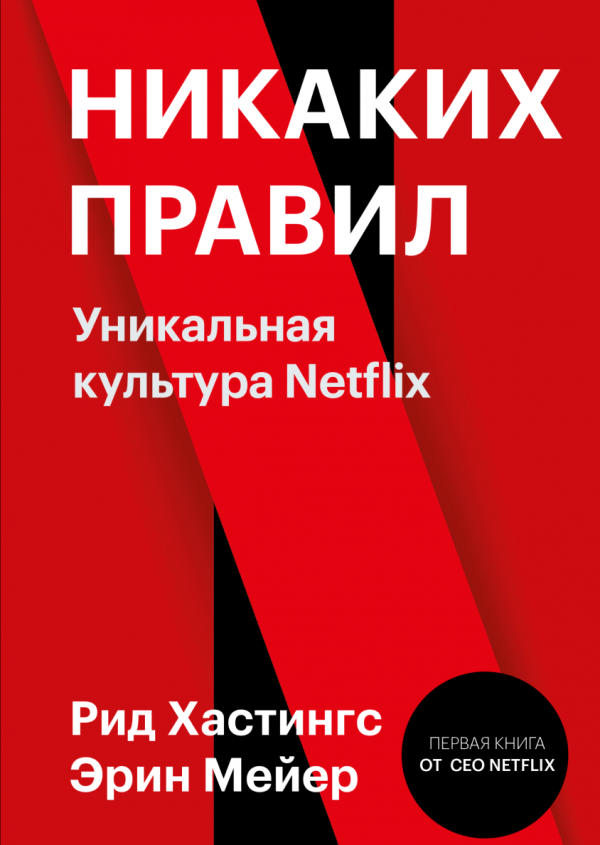
Based on the book “No Rules: The Unique Culture of Netflix
”
Cover photo from here
The post Control or Context. How to choose a company management model appeared first on Business.



