

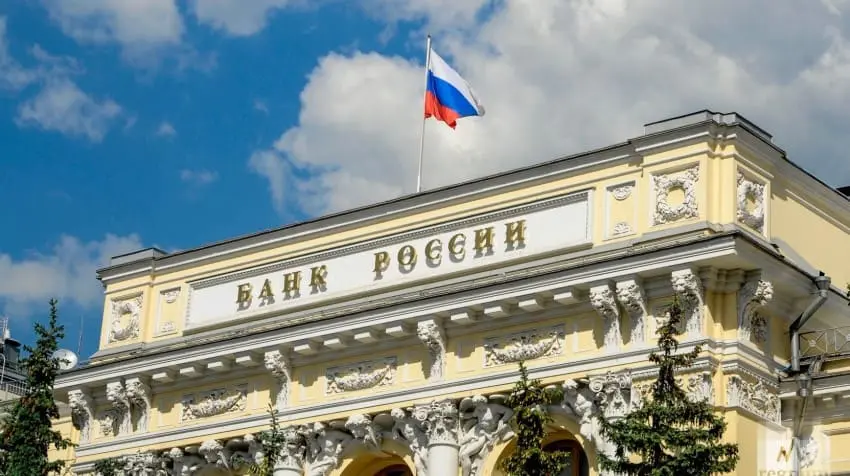
The list of targets for Western sanctions in the event of a Russian invasion of Ukraine continues to expand.
After oligarchs close to the Kremlin and their families, as well as commodity companies and major banks, the Russian central bank is now under the sword of Damocles.
Several European Union countries have proposed sanctions to block part of Russia’s foreign currency reserves at the International Monetary Fund, the Financial Times reported citing European diplomats, Finanz reported.
It is the so-called Special Drawing Rights (SDR) – the IMF’s notional currency, which is a basket of reserve currencies (dollar – 42%, euro – 31%, Japanese yen – 8%, British pound – 8% and Chinese yuan – 11%).
The Central Bank of Russia held $24.2 billion in SDRs on January 1. The total amount of gold reserves tied up with the IMF was almost $30 billion, as another $5.3 billion was due to the reserve position of the Central Bank in the Fund.
Until August 2021, the Central Bank had only $12.2 billion in the IMF. However, this amount has grown sharply after the fund allocated 17.5 billion dollars in the form of SDR in the package of assistance to Russia to overcome the pandemic.
The Russian Central Bank had a total of $630.6 billion in reserves on January 1. Last year, their size increased by $35 billion due to the purchase of foreign currency with the federal budget funds.
The Russian authorities have been afraid of seizing foreign exchange reserves since 2014: immediately after the annexation of Crimea, the Central Bank withdrew more than $100 billion from the account at the Federal Reserve Bank of New York (part of the U.S. Federal Reserve), fearing that access to them would be blocked.
The funds then returned to the U.S., but a new round of the sanctions war in 2018 reignited fears in the Kremlin. The Central Bank withdrew nearly $100 billion from U.S. assets, replacing them with euros, gold, and yuan.
The share of the dollar in foreign reserves fell from 40% to 16%. At the same time, only 7% of Russia’s total reserves are placed directly in the U.S., compared with 30% four years ago.
It is not yet clear what exactly the final package of sanctions will be in case of escalation around Ukraine, and whether it will include measures against the Central Bank. The U.S. is demanding toughness, but the EU is hesitant, and it has not yet been possible to finally agree on a package with all of the bloc’s member states, diplomats involved in the discussions told Reuters.
On the subject: Russian oil companies have “switched” to arms trade
”
Energy dependence makes it harder for the EU to conclude an agreement than it is for the U.S. It’s harder to reach a political agreement,” one explained.
There is no doubt that there will be sanctions, although the European package is likely to be different from the U.S. package. The consensus is to cut off the Russian economy from high-tech and expand the blacklist of state companies that would be banned from doing business with the European Union, Reuters sources said.
Russia’s Central Bank has been targeted by Western sanctions. Photo: Yandex Images
At the same time, the EU is categorically against the introduction of personal sanctions against President Vladimir Putin. As for the oligarchs from his entourage, in their case the measures will be taken if there is evidence of illegal actions.



