

Europe continues to increase its purchases of liquefied natural gas to compensate for the supply shortfall from Gazprom, which has not sold gas in excess of what is booked under long-term contracts for nearly six months.
Through its electronic trading platform (ETP), where customers could buy spot volumes, Gazprom sold 7.3 billion cubic meters last year, almost four times less than in 2020 (27.5 billion).
The ETP was halted in August, days after a court in Düsseldorf refused to take Nord Stream 2 out of the EU’s Third Energy Package. There will be no sales on the platform again this week – from January 31 to February 4 – according to Interfax, citing data from Gazprom Export.
Despite record-low storage reserves, LNG is helping Europe survive the winter.
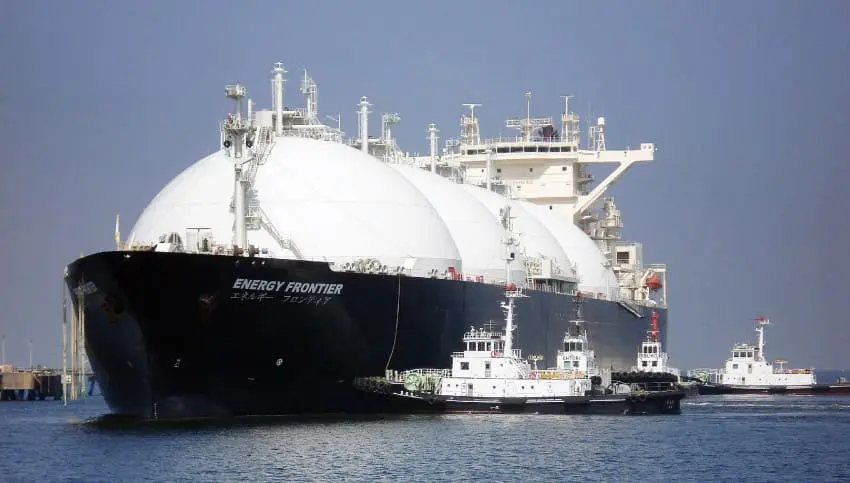
The number of tankers carrying gas near European ports in the North, Baltic and Mediterranean seas and on the Atlantic coast of France has now reached 50, Nikkei reported, citing satellite data.
The number of gas carriers arriving in the EU has doubled since last January, and the capacity of LNG terminals to regasify fuel and pump it into the GTS is now stretched, said Hiroshi Shirakawa, an analyst with Japan Oil, Gas and Metals National Corp.
However, these supplies only partially offset current consumption and do not help increase the reserves in UGSFs, whose occupancy has dropped below 40% and is at an all-time low for comparable data.
Nevertheless, the available gas should be enough for the EU countries for the winter: the volume covers nine weeks, and about the same amount is left until the end of the heating season, analysts estimate S & P Global Platts.
The U.S. and the EU are working on alternative gas supplies to European Union countries in case Russia attacks Ukraine, U.S. President Joe Biden and European Commission President Ursula von der Leyen said in a joint communiqué Friday.
“We are working with governments and with market operators to bring additional natural gas to Europe from around the world,” the statement said.
Source: Finanz



