

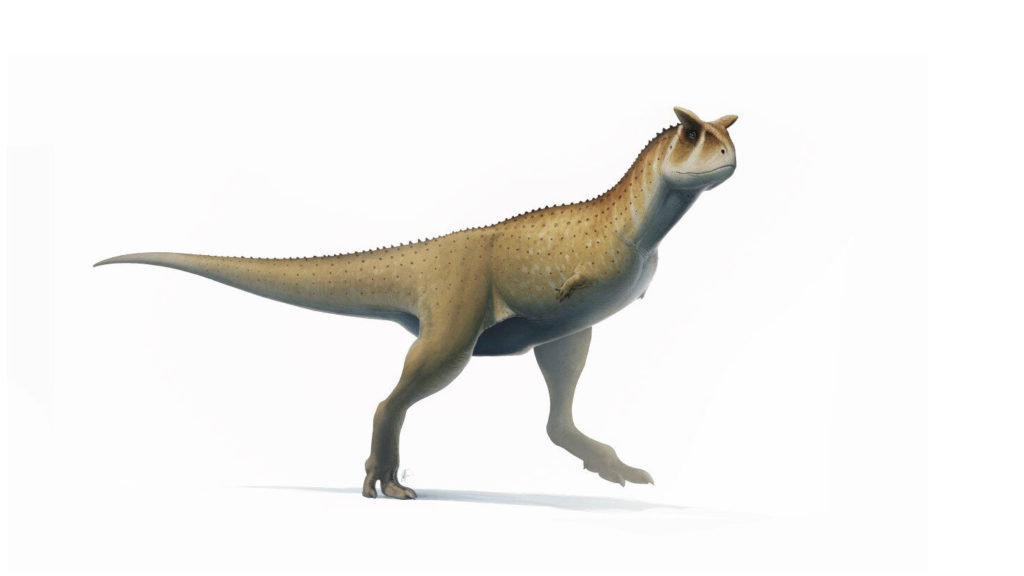

A new dinosaur species, Guemesia ochoai, may be a close relative of the ancestors of the armless group of dinosaurs. They roamed the southern hemisphere more than 70 million years ago. As the scientists note, the partially complete skull found in Argentina provides new evidence for the existence of a unique ecosystem in the Late Cretaceous.
Guemesia ochoai is a species of abelizaurids, higher predatory theropods that roamed modern Africa, South America and India. Although a harmless species, scientists believe that abelisaurids fed on large dinosaurs such as titanosaurs. That said, many species of Abelisaurus had front limbs even shorter than those of the famous Tyrannosaurus rex, and virtually useless. So much so that these dinosaurs can be considered “armless. Fossils of these predators have been found in rocks throughout Africa, South America, India and Europe. The dinosaur, which is about 70 million years old, may have been a close relative of the ancestors of the entire group.
The discovery of the skull of Guemesia ochoai provides valuable information about an area with very few fossils of abelizaurids, and may go some way to explaining why this particular area of modern Argentina was home to such unusual animals. A description of the dinosaur by Argentine researchers has been published in the Journal of Vertebrate Palaeontology.
Read more
Dogs recognize their owners from a distance without using their sense of smell or sight
The world’s most accurate atomic clock is off by just one second in 300 billion years
Astronomers found a new object in the solar system beyond the orbit of Neptune



