

A high-resolution 3d image presents planet Mars. Stock photo
PARIS — Images from Mars reveal how water helped shape the Red Planet’s landscape billions of years ago, and provide clues that will guide the search for evidence of ancient life, a study said Thursday.
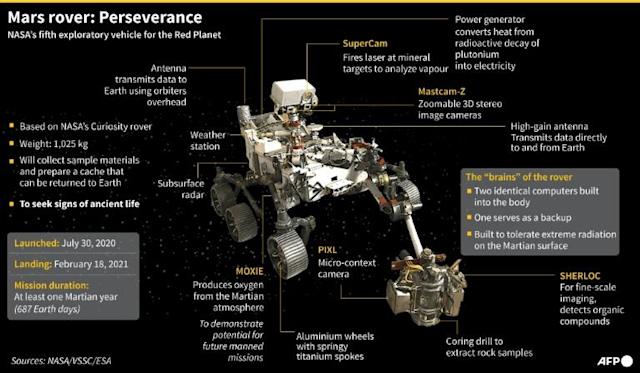
In February, NASA’s Perseverance rover landed in Jezero crater, where scientists suspected a long-gone river once fed a lake, depositing sediment in a fan-shaped delta visible from space.
The study in Science analysed high-resolution images captured by Perseverance of the cliffs that were once the banks of the delta.
Layers within the cliffs reveal how its formation took place.
TECHNOLOGY
TECHNOLOGY
TECHNOLOGY
NASA astrobiologist Amy Williams and her team in Florida found similarities between features of the cliffs seen from the crater floor and patterns in Earth’s river deltas.
The shape of the bottom three layers showed a presence and steady flow of water early on, indicating Mars was “warm and humid enough to support a hydrologic cycle” about 3.7 billion years ago, the study says.


