

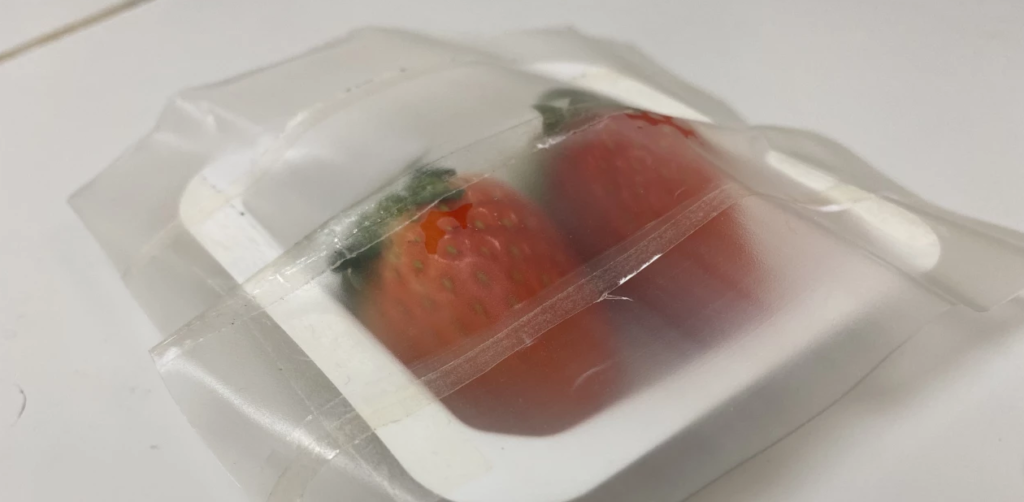

Even though many people go hungry, most food gets thrown away. It spoils all too quickly. A new packaging material made from natural materials extends the shelf life of food and also decomposes easily. Researchers from Harvard University and Singapore’s Nanyang Technological University (NTU) have created it. It looks like an ordinary transparent film. An article about the study was recently published in the journal ACS Applied Materials & Interfaces.
The authors of the development used electrospinning method. It produces polymer fibers by electrostatic forces on an electrically charged jet of solution or melt (in this case, from corn protein). The electroforming method makes it possible to produce polymer fibers with diameters of several hundred nanometers.
In addition to corn protein, the film contains starch, cellulose, and other naturally occurring polymers. These fibers are saturated with natural antibacterial compounds such as thyme, citric acid and acetic acid.
When food products such as meat, fish, fruit or vegetables are wrapped in the film, the antibacterial compounds remain inside the fibres. However, if humidity increases or certain enzymes are produced by “harmful” bacteria, these compounds are automatically released. They kill germs, bacteria and any fungi that cause food to spoil.
Read more
Look at the electric truck of the future without a driver’s cab and with huge wheels at the back
Astronomers photographed a radioactive black hole closest to Earth
Mammoths lived much longer than scientists thought: traces of their DNA found by accident



