

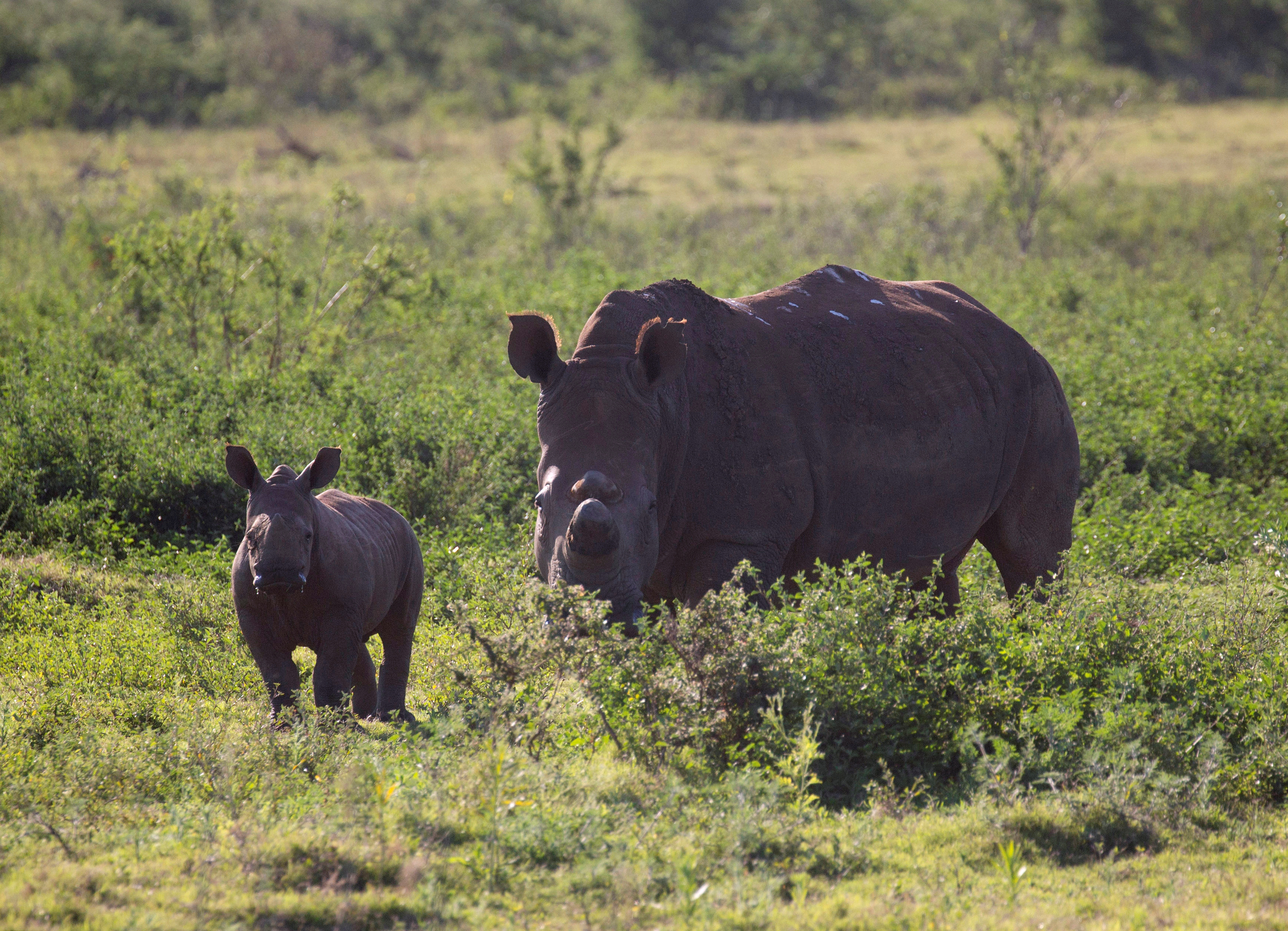
A black dehorned rhinoceros is followed by a calf at a game reserve in South Africa in 2012; the horn is prized as a cure to cancer, an unproven claim that has contributed to the decimation of the species. © STEPHANE DE SAKUTIN – AFP/File
JOHANNESBURG — Researchers in South Africa are working on a potentially new method to deter rhino poachers and smugglers by using radioactive markers to make smuggled horns detectable at global ports of entry and less desirable to buyers.
South Africa is home to the world’s largest rhino population but has battled poaching for decades. The rhino horn is one of the most expensive commodities in the world by weight, fetching tens of thousands of dollars per kilogram.
Demand is mainly from Asia where rhino horns are believed to have potent medicinal properties and are also a symbol of wealth.
The study, a collaboration between the University of Witwatersrand and a global team of scientists and funded by Russia’s nuclear agency Rosatom, is not using radioactive material on the animals yet, but hopes to if proven safe.
TECHNOLOGY
TECHNOLOGY
TECHNOLOGY
“We are doing our homework at the moment and our whole aim is to find an appropriate quantity of radioactive material which will not harm the animal,” said James Larkin, director at the radiation and health physics unit at the University of Witwatersrand in Johannesburg.
Rhinos Igor and Denver at the Buffalo Kloof Private Game Reserve in the Eastern Cape are the first to have trace amounts of non-radioactive, stable isotopes inserted in a hole made in their horns.



