

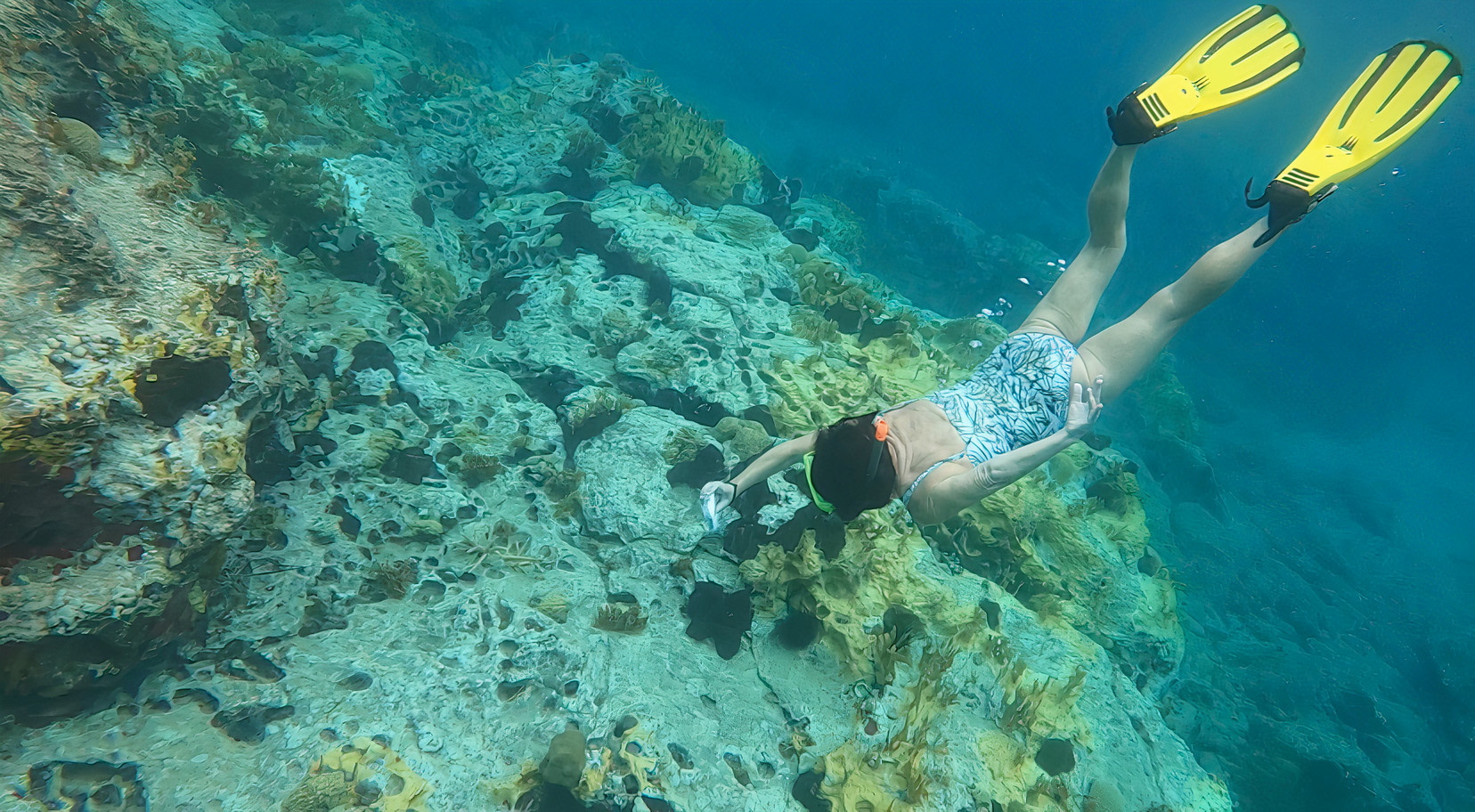
Marine scientist Deborah Brosnan does a research dive on a coral reef, in this undated handout in Antigua and Barbuda, 2020. Courtesy of Deborah Brosnan & Associates/Handout via REUTERS
Marine scientist Deborah Brosnan remembers “feeling like a visitor at an amazing party” on her diving trips to a bay near the Caribbean island of Saint Barthelemy where she swam above coral reefs with nurse sharks, sea turtles, and countless colorful fish.
But on a return trip after Hurricane Irma ravaged the island in 2017, she dove the reef again – and was shocked by what she saw.
“Everything was dead,” she recalled in an interview with Reuters. “There were no sharks, no sea turtles, no seagrass, no living coral. I felt like I lost my friends.”
Recent research has shown that warmer atmospheric temperatures and sea-level rise contribute to more frequent, destructive tropical storms.
TECHNOLOGY
TECHNOLOGY
TECHNOLOGY
Brosnan’s experience helped spark a mission to create reef restoration technology. The project will span 1 hectare (2.6 acres) of dead reef off the coast of the Caribbean nation Antigua and Barbuda.
The project, known as Ocean-Shot, was announced Thursday at the Global Citizen’s Forum. The technology, funded by U.S. entrepreneur John Paul DeJoria, the co-founder of Paul Mitchell hair products, mimics the design and shape of natural reefs to provide opportunities for colonization by corals and other marine life.



