

What the big people couldn’t do, the little Omicron did. No cancellation of monetary policy tightening by the U.S. Federal Reserve is expected, despite expectations amid the onset of a new viral strain.
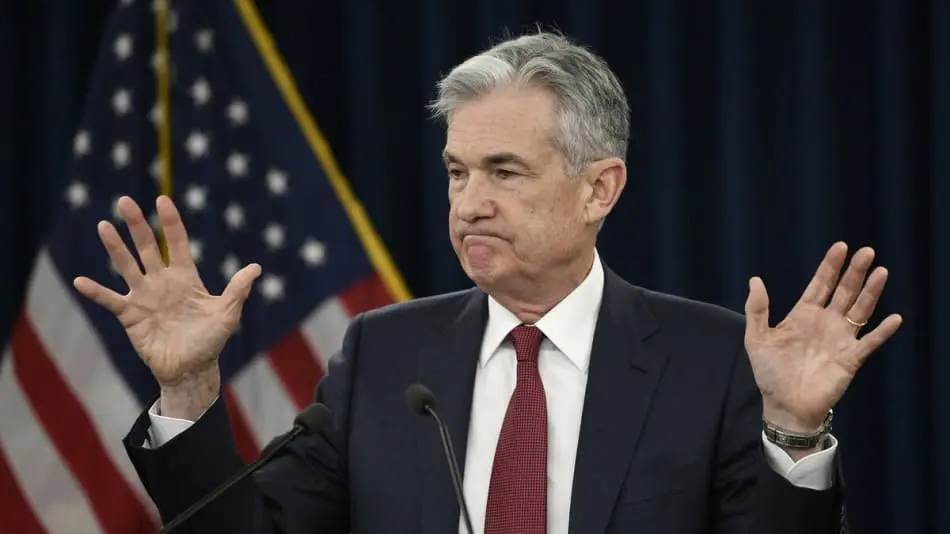
The head of the U.S. central bank Jerome Powell, speaking before the Senate Banking Committee, made it clear that the pace of asset buybacks could begin earlier than previously thought. As well as rate increase, which, according to WSJ, may start as early as the first half of 2022.
Jerome Powell accelerated the fall of the US stock indices
on this background the prices on the US stock indices were melting before our eyes
.
Dow Jones and S&P 500 indices plummeted by 1.86% and 1.90%, respectively. The Nasdaq was even weaker, losing over 2.4%. The fall affected the whole range of liquid securities. On this background the companies, which shares resisted the seller’s onslaught, stood out.
Among them the world leader in consumer electronics Apple (AAPL) with a 3.15% gain, the king of vaccine giant Pfizer (PFE) +2.54%, and the future of auto manufacturing Tesla (TSLA) +0.68%.
Novavax (NVAX) categorically refused to go down. Either the company does not rest in laurels of Moderna (MRNA), which is nine times more expensive than it, or it is a “sacral” sign for getting to the elite in the nearest future. But in the end, NVAX stock added 7.56%. That’s a fine result. Especially when you consider that all the biotechs are down.
The bulls were mercilessly beaten in the oil market as well. The West Texas benchmark WTI lost more than 4% in price, with the price momentarily falling below $65 a barrel. But a pullback before the close smoothed out another collapse, with the contract eventually closing just below $67.
A collapse in Brent brought the value of a barrel down to $68.
However, at the close of trading the North Sea benchmark was able to approach $70 a barrel, where it recorded a daily loss of 4.42%.
Oil traders are currently focused on the meeting of OPEC+ participants, which will be held on December 2, Thursday. More and more analysts are inclined to think that the organization will not make adjustments for production increase.



